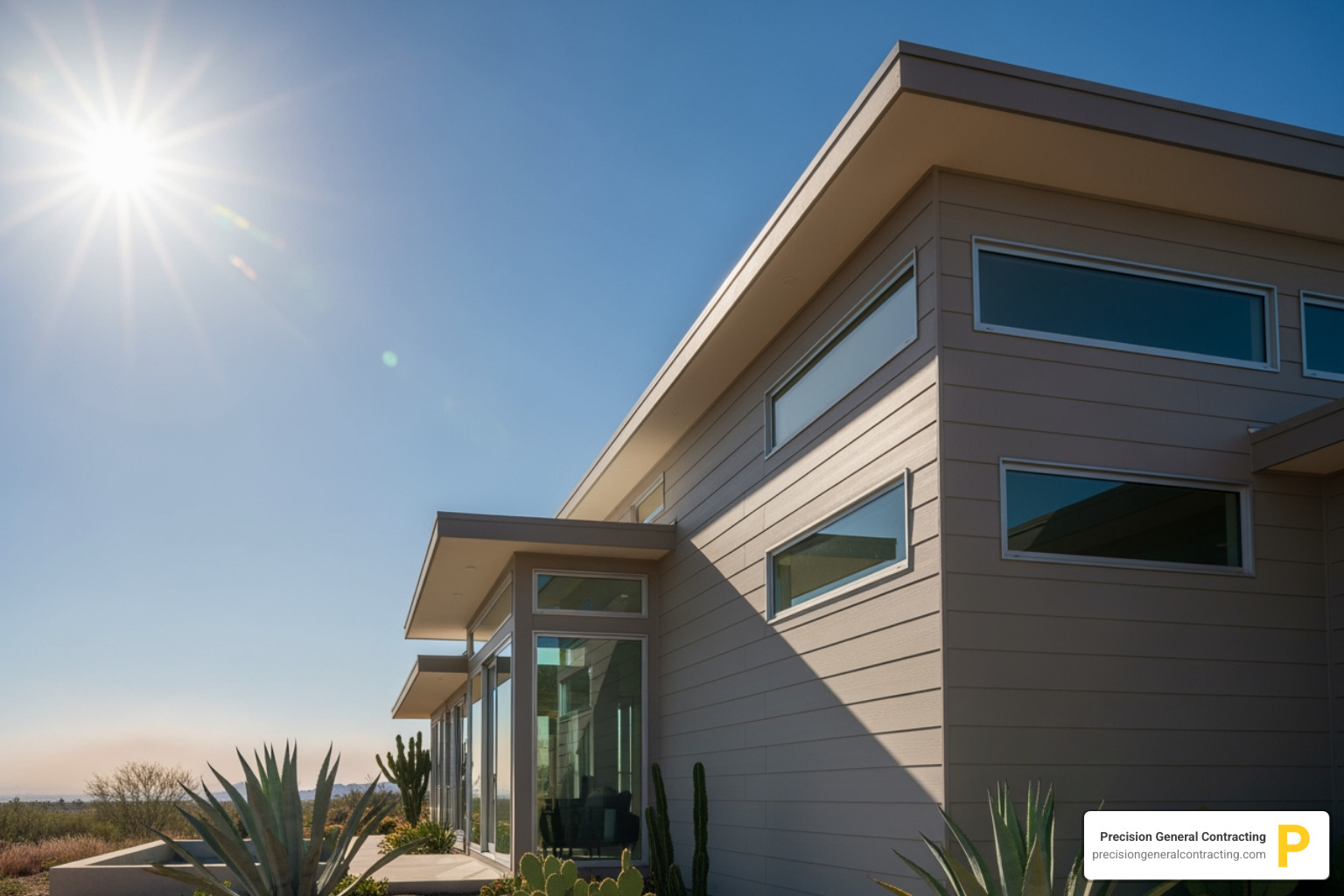
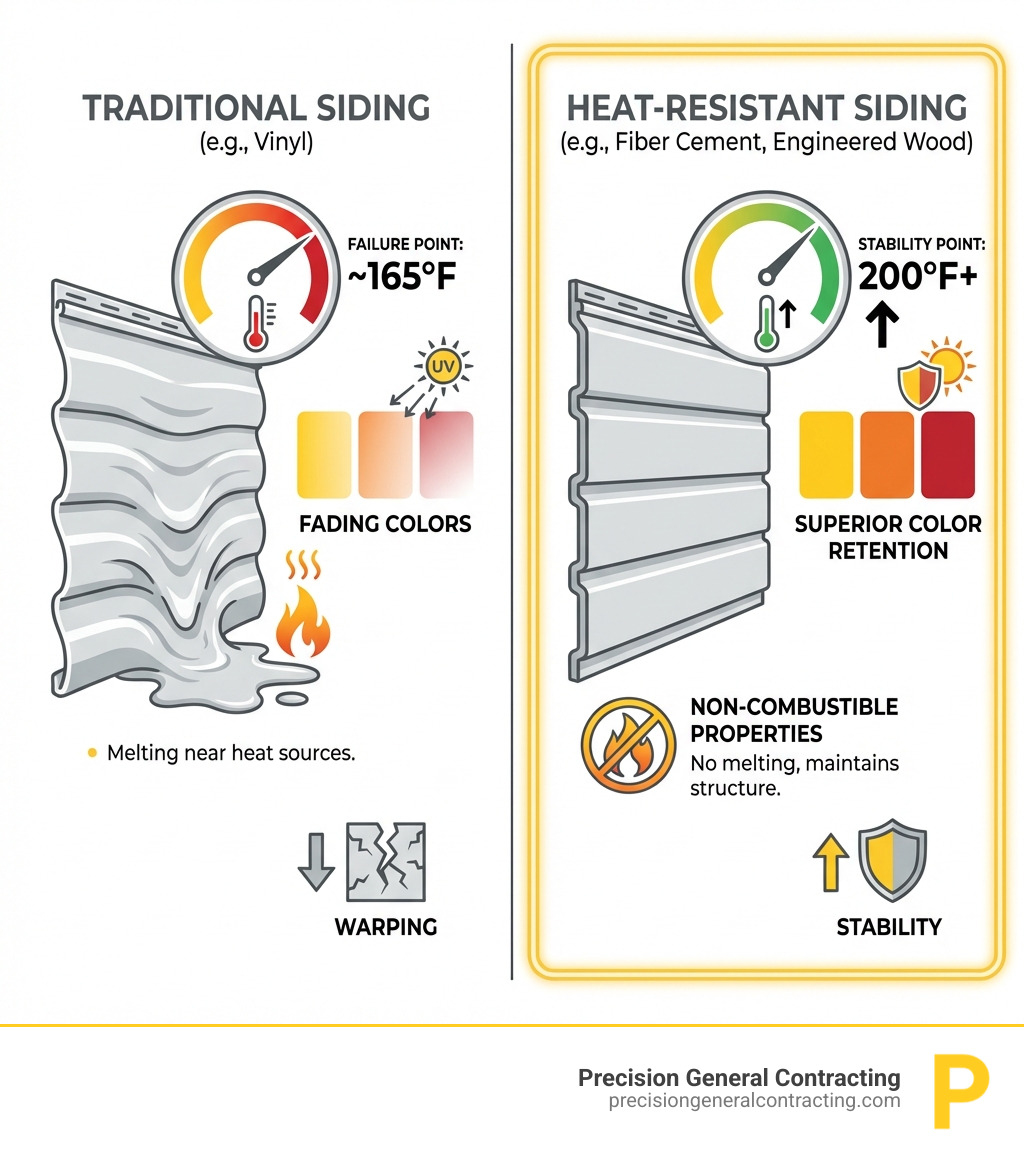
Heat resistant siding is specially engineered exterior cladding designed to withstand high temperatures without warping, melting, or fading, typically enduring temperatures exceeding 200°F compared to traditional vinyl that can fail at 165°F.
Top Heat-Resistant Siding Options:
Picture this: It's a scorching July afternoon, and the sun is beating down on your home. You glance outside and notice something troubling—your siding is starting to buckle near the barbecue grill, and the color looks faded and uneven.
You're not alone. Rising global temperatures are pushing home exteriors to their limits. On July 22, 2024, the world recorded its hottest day in recorded history. For homeowners, this means traditional siding materials face unprecedented stress from extreme heat, intense UV rays, and prolonged sun exposure.
Your siding is your home's first line of defense against the elements. When it fails, you're not just dealing with an eyesore—you're facing potential water damage, increased energy bills, costly repairs, and even fire risks. In areas experiencing temperatures above 100°F for extended periods, choosing the wrong siding material can mean dealing with warping, melting, cracking, and fading in just a few years.
The good news? Modern heat-resistant siding materials are engineered to handle these extreme conditions without compromising on appearance or performance. Whether you live in a hot, dry climate or face the double challenge of heat and humidity, understanding your options can save you thousands in repairs and give you lasting peace of mind.
When we talk about traditional siding, we often think of vinyl and wood. While these materials have been popular for decades, they come with significant drawbacks, especially in the intense heat we experience in places like San Diego County. Our homes here are constantly battling not just high ambient temperatures, but also relentless sun exposure and even reflected heat from nearby surfaces.
Vinyl siding gained popularity in the 1960s as a more durable and energy-efficient alternative to aluminum. However, its performance significantly degrades under extreme heat. The primary issue is its thermoplastic nature. When temperatures approach 160–165 degrees Fahrenheit, vinyl siding can start to melt or warp. This isn't just a problem in a house fire; it can happen from everyday heat sources. Think about a barbecue grill placed too close to the house, or even sunlight reflecting off energy-efficient windows on a neighboring property. We've seen warped vinyl siding that creates unsightly ripples and gaps, leaving your home vulnerable.
These gaps aren't just cosmetic; they can make your home more susceptible to other weather-related damage, allowing moisture to penetrate and potentially leading to mold or rot. Beyond warping, sustained UV light exposure, common in our sunny California climate, can cause the color of traditional vinyl to fade unevenly over time, making your home look tired and worn. It can also become brittle, making it prone to cracking or breaking, especially with impacts. While traditional vinyl can warp at temperatures as high as 165°F, heat-resistant siding is formulated to endure temperatures that exceed 200°F, offering a crucial difference in performance.
Wood siding, while offering a classic aesthetic, faces its own set of challenges in hot climates, particularly in areas prone to wildfires like many parts of California. Wood is inherently combustible, meaning it can fuel a fire rather than resist it. In a wildfire-prone region, choosing exterior siding that can resist or even help shield your home from heat and flames is of utmost importance. The research from the University of California Fire Research Laboratory shows that wood siding can ignite and sustain a fire, posing a significant risk to your entire home.
Even apart from fire, wood siding is susceptible to warping and shrinking due to fluctuating temperatures and humidity. In hot, humid conditions, wood can absorb moisture, leading to swelling, and then shrink as it dries, causing boards to warp, crack, or pull away from the home. This creates openings for moisture intrusion and pests. Furthermore, wood siding requires significant maintenance, including frequent repainting to protect it from the elements. Paint can blister and peel under intense sun, leaving the wood exposed and accelerating its degradation. This constant upkeep can be a significant burden for homeowners.
When we talk about heat-resistant siding, we're not just discussing materials that can handle a warm day. We're talking about advanced compositions and manufacturing processes designed to perform in extreme conditions, often enduring temperatures exceeding 200°F without losing their structural integrity or aesthetic appeal. This is a significant leap from traditional siding, which can often warp or melt at much lower thresholds. The key lies in selecting materials with low thermal conductivity, high dimensional stability, and superior UV resistance.
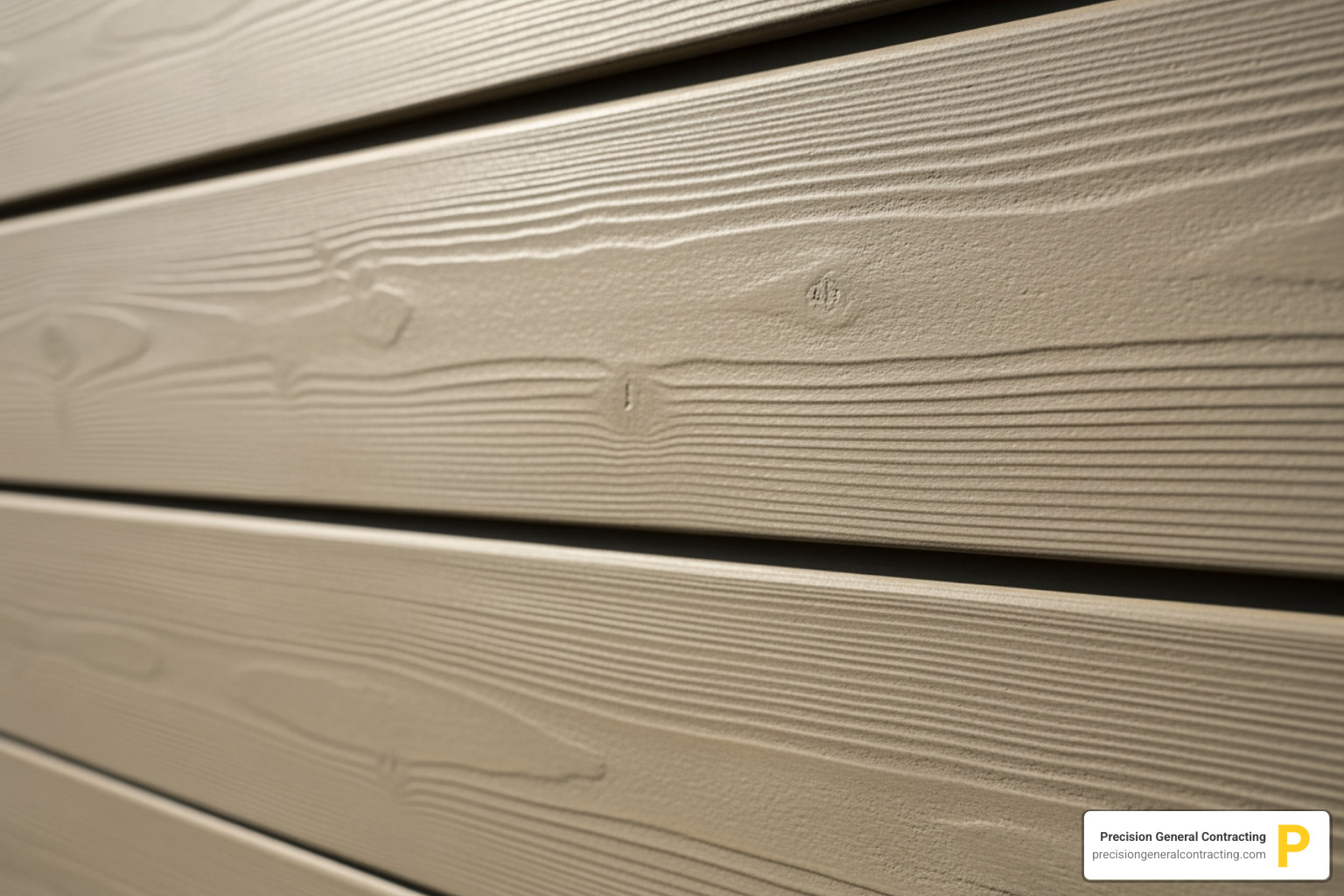
Fiber cement siding stands out as a top contender for heat resistance, and for good reason. Its composition—a durable blend of cement, sand, and cellulose fibers—gives it exceptional strength and stability. Unlike wood, fiber cement is non-combustible, earning it a Class A fire rating when tested in accordance with ASTM E84, with a flame spread index of 0. This is a critical factor for homes in wildfire-prone areas across California.
Beyond fire resistance, fiber cement boasts impressive dimensional stability, meaning it resists warping, shrinking, and swelling even under extreme temperature fluctuations and humidity. It's also highly resistant to UV rays, preventing the fading and degradation that plague other materials. Manufacturers like James Hardie have even developed climate-specific formulations through their Hardie™ Zone System. For our Southern California climate, the HZ10® formulation is specifically engineered to resist blistering heat, humidity, stronger UV rays, and even hurricane-strength winds, ensuring long-lasting performance. This material also offers great design versatility, capable of mimicking the look of wood, stucco, or masonry, allowing homeowners to achieve their desired aesthetic without compromising on durability.
Engineered wood siding offers an excellent balance of natural aesthetics and improved performance against heat. Unlike traditional wood, engineered wood undergoes a specialized manufacturing process where wood strands or fibers are treated with resins, waxes, and zinc borate. This proprietary SmartGuard® process significantly improves its resistance to heat, moisture, termites, and fungal decay.
While not entirely non-combustible like fiber cement, engineered wood sidings like LP SmartSide are engineered to have virtually no bowing, warping, splitting, or cupping, which are common problems for non-engineered wood in high heat. This improved stability ensures that the siding maintains its appearance and protective qualities even after prolonged exposure to temperatures above 100°F. The treatment also helps prevent the blistering paint and shrinkage that can undermine the aesthetics of traditional wood siding.
For those who prefer vinyl, advanced heat-resistant vinyl and composite sidings offer a significant upgrade over their traditional counterparts. These materials are typically made from high-performance polyvinyl chloride (PVC) but incorporate advanced technologies to overcome the weaknesses of standard vinyl.
Key features include advanced reflective pigments and thermal-resistant technology that minimize heat absorption. This means the siding's surface temperature stays lower, reducing the risk of warping and distortion. These materials also tend to be thicker and more rigid than traditional vinyl, further enhancing their dimensional stability. With UV-resistant color technology baked into the material, advanced vinyl and composite sidings offer superior color retention, preventing the uneven fading often seen in traditional vinyl. Some formulations are designed to endure temperatures exceeding 200°F, providing a much higher heat tolerance than the 165°F limit of standard vinyl. Composite sidings, in particular, often use a blend of inorganic minerals and polymeric resins, which allows them to absorb heat slower and offer excellent fade and moisture resistance, making them a smart choice for our hot and humid San Diego climate.
Metal siding, typically made from steel or aluminum, is another excellent option for heat-resistant siding. Its inherent non-combustibility makes it a superior choice for fire resistance, particularly in WUI zones. Steel siding, for instance, offers robust durability and longevity.
However, it's important to consider that aluminum is a great conductor of heat, which can make it less energy-efficient in hot climates if not properly insulated. Modern metal sidings often come with advanced coatings that offer excellent color retention and UV resistance, preventing fading and maintaining their aesthetic appeal over time. While metal can absorb and transfer heat, proper installation with a rainscreen or insulation can mitigate this, ensuring that the heat doesn't transfer directly into your home. Our Four Seasons covers, made from premium structural aluminum, are designed with durability and longevity in mind, resisting rust, warping, cracking, rotting, and insects, demonstrating our commitment to high-performance metal solutions.
Investing in heat-resistant siding for your home in San Diego County isn't just about preventing unsightly warping or fading. It's about a comprehensive upgrade that touches on critical aspects of home ownership: safety, energy efficiency, long-term value, and even environmental responsibility. When we choose superior materials, we're not just buying siding; we're buying peace of mind and a more resilient home.
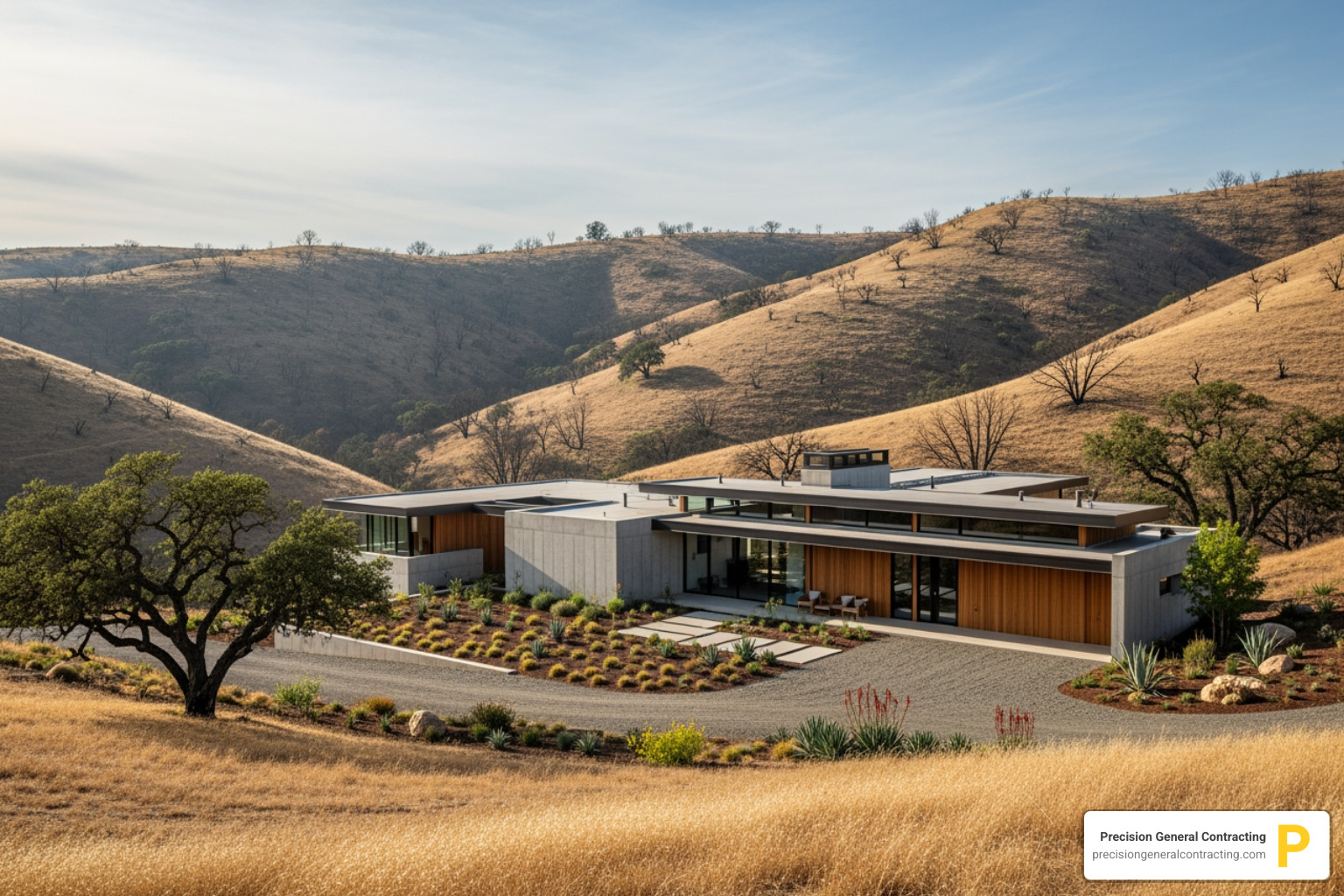
In California, fire protection is paramount, especially as wildfires are becoming increasingly frequent and powerful. Choosing siding that offers superior fire resistance is a non-negotiable for many homeowners. This is where non-combustible materials truly shine.
Fiber cement siding, for example, is inherently non-combustible. It has a Class A fire rating when tested in accordance with ASTM E84, with a flame spread index of 0. This means it won't ignite when exposed to flames and won't contribute to the spread of fire. This is a stark contrast to wood siding, which fuels a fire, or vinyl siding, which melts and releases toxic gases while exposing the underlying combustible materials to flames. With 80 million properties facing a significant threat of wildfire exposure, and one in six Americans living in a risky area, selecting fire-resistant siding is a critical step in fortifying your home. It provides a defensible barrier that can significantly reduce the risk of external flame spread and protect your loved ones and your investment. For broader context on how climate change is influencing wildfire patterns, the U.S. Environmental Protection Agency provides useful data and trends on climate change indicators related to wildfires.
One of the most immediate and tangible benefits of heat-resistant siding is its contribution to your home's energy efficiency. In our sunny San Diego climate, keeping cooling costs down is a constant battle. Heat-resistant siding works by reducing the amount of solar radiant heat absorbed by your home's exterior.
Materials engineered with reflective pigments and thermal-resistant technology minimize heat absorption, keeping the surface temperature of your siding lower. This means less heat is transferred into your home's walls and interior, reducing the workload on your HVAC system. When your air conditioner doesn't have to work as hard, you'll see a noticeable decrease in your energy bills. Factors like color and material composition play a significant role here: lighter colors naturally reflect more sunlight and heat, while thicker, more thermally resistant materials (like composite or fiber cement) absorb heat slower than thinner options like vinyl. This can translate into significant savings, especially during those long, hot San Diego summers. The Department of Energy notes that cool roofs and walls can reduce peak cooling demand by 10-15 percent.
The upfront cost of heat-resistant siding might be higher than traditional options, but its long-term value and low maintenance requirements make it a smart investment. We believe in providing solutions that stand the test of time, and heat-resistant siding perfectly aligns with that philosophy.
| Siding Type | Heat Resistance (to warping/melting) | Fire Rating | Maintenance | Lifespan |
|---|---|---|---|---|
| Fiber Cement | Excellent (>200°F) | Class A (0 FSI) | Low | 30-50+ yrs |
| Engineered Wood | Good (Resists warping/cupping) | Moderate | Low to Moderate | 20-30+ yrs |
| Advanced Vinyl/Composite | Very Good (>200°F) | Low to Moderate | Very Low | 20-40 yrs |
| Traditional Vinyl | Poor (Warp/melt at 160-165°F) | Poor | Very Low | 15-20 yrs |
| Traditional Wood | Poor (Warp/crack, highly combustible) | Poor | High (Repainting) | 10-20 yrs |
FSI = Flame Spread Index
With heat-resistant materials, you'll experience fewer repairs and replacements due to heat damage. Many options, like fiber cement with ColorPlus® Technology finishes, are engineered to outlast conventional paint, offering greater durability and resistance to fading from sustained UV light exposure. This means no need for frequent repainting, saving you time and money. Furthermore, materials like fiber cement and engineered wood treated with zinc borate are resistant to rot, pests, and termites, reducing another common source of costly home repairs. From an environmental perspective, the longer lifespan of these materials means less waste, and many advanced vinyl and composite options are even recyclable, contributing to a reduced environmental footprint. This combination of durability, low maintenance, and energy savings makes heat-resistant siding a truly cost-effective choice in the long run.
Choosing the right heat-resistant siding for your home in our diverse San Diego County climate involves careful consideration of several factors. It's not just about picking a material; it's about making an informed decision that balances performance, aesthetics, and your budget. We're here to help you steer these choices to find the perfect fit for your home.
Understanding what makes siding truly heat-resistant is the first step:
With so many options, how do we make the best choice for your home in San Diego, Carlsbad, or Rancho Santa Fe?
We've explored the significant challenges that traditional siding materials like vinyl and wood face in the face of our increasingly hot climate, from warping and melting to fire risks and constant maintenance. We've also seen how heat-resistant siding materials—like fiber cement, engineered wood, advanced composites, and metal—offer robust solutions, leveraging advanced compositions, manufacturing processes, and climate-engineered formulations to withstand extreme temperatures, UV damage, and even wildfires.
The benefits of choosing heat-resistant options extend far beyond just durability. They contribute to superior fire protection, improved energy efficiency (leading to potentially lower cooling costs), and offer long-term value through reduced maintenance and a longer lifespan. This means a safer, more comfortable, and more cost-effective home for you and your family.
Investing in heat-resistant siding is an investment in your home's resilience and future. For homeowners seeking expert installation and durable exterior solutions custom to the unique demands of San Diego County, the team at Precision General Contracting is here to help. We are committed to providing top-tier services and products that protect your home from the elements, ensuring lasting beauty and performance. Our dedication to quality and our understanding of local climate needs mean you can trust us to fortify your home against the heat.
Learn more about our siding installation services in San Diego.