Solar Panel installation in San Diego is one of the smartest investments you can make for your home in 2026. With approximately 266 sunny days per year, San Diego offers ideal conditions for solar energy production—and with rising utility rates from SDG&E, more homeowners are taking control of their energy costs.
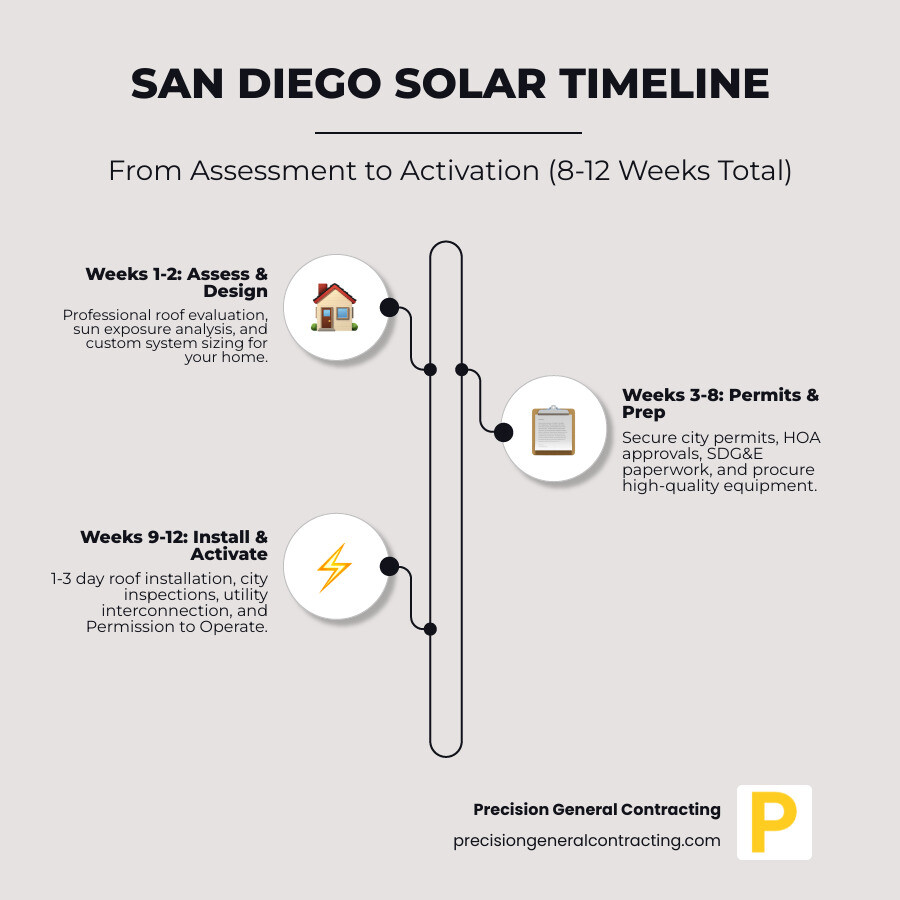
Here's what you need to know about the solar installation process in San Diego:
The financial benefits are compelling. The Federal Solar Tax Credit now covers 30% of your total system cost with no upper limit. California also offers a property tax exemption, meaning your home's increased value from solar won't raise your property taxes. Most San Diego homeowners see their solar systems pay for themselves in 5-7 years.
But here's what many homeowners don't realize: the installation process involves more than just mounting panels on your roof. You'll navigate SDG&E's Net Energy Metering program (now NEM 3.0), coordinate city inspections, and make critical decisions about equipment like inverters and battery storage.
This guide walks you through every step of solar installation in San Diego—from understanding your financing options to choosing the right equipment for your home's specific needs.
When we talk about solar panel installation in San Diego, the conversation usually starts with the "wallet" benefits. Let’s be honest: while helping the planet is a fantastic bonus, most of us are tired of opening those monthly SDG&E bills that look more like a car payment.
In 2026, the financial landscape for solar remains incredibly favorable for residents from Chula Vista up to Oceanside.
For a deeper dive into the numbers, check out our article about how solar panels can save San Diego homeowners money.
Choosing how to pay for your system is just as important as choosing the panels themselves. We generally recommend owning your system to maximize your Return on Investment (ROI).
| Feature | Cash Purchase | Solar Loan | Lease / PPA |
|---|---|---|---|
| Ownership | You own it 100% | You own it | Third-party owned |
| Federal Tax Credit | You keep the 30% | You keep the 30% | Installer keeps it |
| Maintenance | Your responsibility | Your responsibility | Included |
| Long-term Savings | Highest | High | Lower |
| Home Resale | Adds value | Adds value | Can complicate sales |
Leasing might seem attractive because of the "$0 down" hook, but it can be predatory. Many homeowners have found that leased systems come with complicated contracts that make it difficult to sell the home later. Owning your system—either through cash or a low-interest loan—is almost always the better path for long-term wealth.
How long does it take for the sun to pay you back? In San Diego, the typical payback period is between 5 and 7 years. After that, the energy you produce is essentially free. Furthermore, solar panels are a proven way to boost your property's appeal. Prospective buyers in 2026 are looking for energy-efficient homes to hedge against future utility hikes. You can learn more about this in our guide on how solar panels increase home value in San Diego.
If you’ve lived in San Diego for more than a week, you know the name SDG&E. Navigating their requirements is a major part of San Diego's solar Panel installation process.
The biggest change in recent years is the transition to Net Energy Metering 3.0 (NEM 3.0). Under the old rules (NEM 2.0), the utility company bought your excess solar energy at nearly the same price they sold it to you. It was like a 1-to-1 trade.
Under NEM 3.0, the "export rate"—the price SDG&E pays you for the power you send back to the grid—has dropped significantly. This makes the "buy low, sell high" strategy less effective. To get the most out of your system now, you want to use as much of your own power as possible. For a technical breakdown, see how Net Metering works in San Diego.
Because of NEM 3.0, battery storage has shifted from a "luxury" to a "necessity" for many. Without a battery, your excess midday sun goes to the grid for pennies, and you still have to buy expensive power from SDG&E at night. With a battery, you store that midday sun and use it during the "Peak" evening hours when rates are highest.
SDG&E uses Time-of-Use rates, meaning electricity is more expensive during the late afternoon and evening (typically 4 PM to 9 PM). A well-designed solar + battery system allows you to avoid these peak prices entirely. We call this "load shifting," and it’s the key to achieving those $10 monthly bills. To see where the industry is headed, read about the future of solar energy in San Diego.
Many people think solar installation is a weekend DIY project. While we admire the ambition, the reality in San Diego involves a lot of red tape and technical precision.
We start by looking at your roof. Is it shingle, tile, or flat? Is it old and crumbly, or brand new? A professional assessment ensures your roof can handle the weight of the panels for the next 25 years. We also look at your electrical panel; some older homes in areas like La Mesa or El Cajon may need a panel upgrade to handle the new solar input.
San Diego has specific building codes and safety requirements. Your installer must submit a permit package to the city or county. If you live in a community with an HOA—common in 4s Ranch or Carmel Valley—you’ll also need their blessing. Don't worry; California law (the Solar Rights Act) generally prevents HOAs from outright banning solar, but they can have a say over the aesthetics. Check out what to expect during the solar panel permitting process in San Diego for more details.
This is the exciting part! The actual installation usually takes 1 to 3 days. Our crews move fast, mounting the racking, securing the panels, and wiring the inverters.
Once the panels are up, they can’t be turned on yet. First, a city inspector must verify that everything is up to code. Then, we submit the final paperwork to SDG&E for "Permission to Operate" (PTO). This is the final hurdle before your meter starts spinning backward. For a list of specific requirements, see our article on San Diego Solar permits, inspections, and installation requirements.
Before you sign a contract, there are a few local factors to consider:
While the roof work is fast, the administrative side takes time. You should plan for an 8 to 12-week window from the moment you sign the contract to the day you flip the switch.
Working with a professional solar panel installer in San Diego can help streamline this timeline. We know the inspectors in Lakeside and the permit clerks in San Marcos, which helps keep things moving.
Not all solar equipment is created equal. In the industry, we often say that the panels are the "body" of the car, but the inverters are the "engine."
You'll hear a lot about "Tier 1" panels. This isn't necessarily a measure of quality, but rather the financial stability of the manufacturer. However, in 2026, most Tier 1 panels offer excellent efficiency and 25-year warranties. For help choosing, read how to choose between Tier 1 and Tier 2 solar panels.
There are two main types of inverters:
Solar panels are remarkably low maintenance, but they aren't "no maintenance." San Diego’s dust and occasional wildfire ash can create a film that blocks sunlight. A quick seasonal cleaning can keep your efficiency high. Learn more about solar panel maintenance through our article.
Yes, absolutely. Under NEM 3.0, a battery is the only way to truly "bank" your energy and avoid SDG&E's high evening rates. It also provides peace of mind during grid outages, ensuring your fridge stays cold and your lights stay on.
With current utility rates and the 30% tax credit, most homeowners see a full ROI in 5 to 7 years. Given that the systems are designed to last 25+ years, that’s nearly two decades of pure profit.
San Diego’s "May Gray" and "June Gloom" won't shut your system down. Panels still produce energy from diffused sunlight. While production will be lower than a clear July day, your system is designed with these weather patterns in mind to ensure your annual production meets your needs.
Making the switch to solar is a journey, but it’s one you don't have to take alone. At Precision General Contracting, we believe in building for the long haul. Just as our durable, low-maintenance Four Seasons covers are made from premium structural aluminum to withstand the elements, we believe your solar system should be a "set it and forget it" asset for your home.
We offer a transferable Lifetime Warranty on our core products, ensuring resistance to rust, warping, and cracking—the same philosophy of durability we bring to every home improvement conversation. Whether you’re just starting to research solar panel installation or you're ready to crunch the numbers with our Solar Panel ROI Calculator, we are here to help.
San Diego is the sunniest place to call home—it’s time your home started paying you back for all that sunshine. Let's get your meter spinning backward together!