Why Finding the Right Fiber Cement Siding Installers Matters
Fiber cement siding installers are the professionals who transform your home's exterior with one of the most durable siding materials available. Choosing the right installer is critical because even the best fiber cement siding can fail if not properly installed.
What to Look for in Fiber Cement Siding Installers:
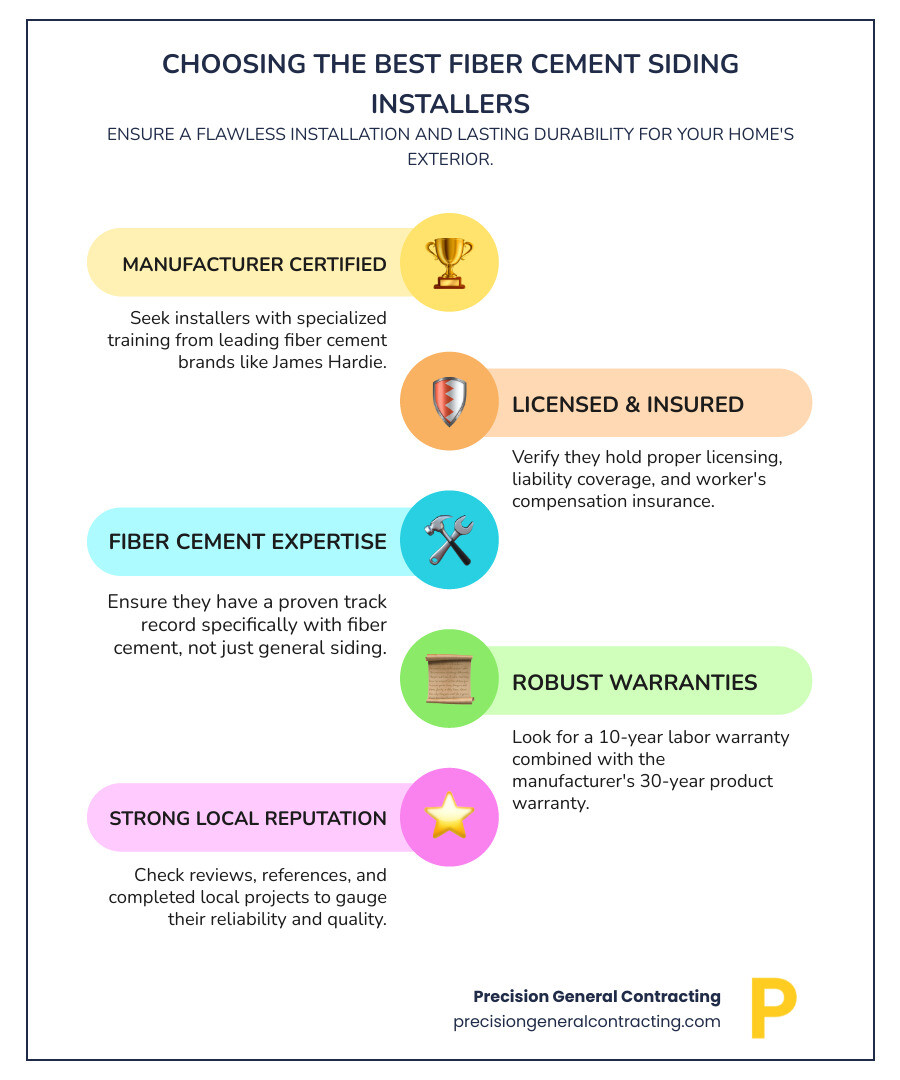
Manufacturer Certification - Look for installers with specialized training from brands like James Hardie (James Hardie Alliance members)
Proper Licensing and Insurance - Verify they carry appropriate liability coverage and worker's compensation
Experience with Fiber Cement - Ask about their track record specifically with fiber cement installation, not just general siding
Strong Warranties - Expect a 10-year labor warranty in addition to the manufacturer's 30-year product warranty
Local Reputation - Check reviews, references, and completed projects in your area
If you're considering fiber cement siding for your home, you're making a smart choice. This material combines cement, sand, and cellulose fibers to create siding that resists fire, termites, and harsh weather while lasting up to 50 years. It won't rot like wood, won't melt like vinyl, and requires repainting only every 15 to 20 years.
But here's the catch: improper installation can turn this premium material into a nightmare of moisture damage, voided warranties, and costly repairs.
The installation process requires specific expertise. Installers must understand how to manage silica dust safety, maintain proper clearances from grade and roofing, install weather-resistant barriers correctly, and use specialized fastening techniques. They need to know that nails must be flush but not overdriven, that expansion gaps are essential, and that flashing details can make or break your siding's performance.
For a 2,000-square-foot home, professional installation typically costs between $20,000 and $28,000, roughly double the DIY material cost. While that might seem steep, professional installers bring the tools, training, and warranties that protect your investment for decades.
Why Choose Fiber Cement Siding?
When it comes to enhancing your home's exterior, few materials offer the blend of durability, aesthetics, and low maintenance that fiber cement siding does. As experienced professionals in the home improvement industry, we understand the importance of selecting materials that stand the test of time, especially in diverse climates like San Diego County.
Fiber cement siding is a unique composite material, typically made from a blend of cement, sand, and cellulose fibers. This combination creates an incredibly robust product that mimics the look of natural wood, stucco, or masonry without their inherent vulnerabilities. It's a fantastic alternative to traditional wood siding, offering superior performance and longevity.
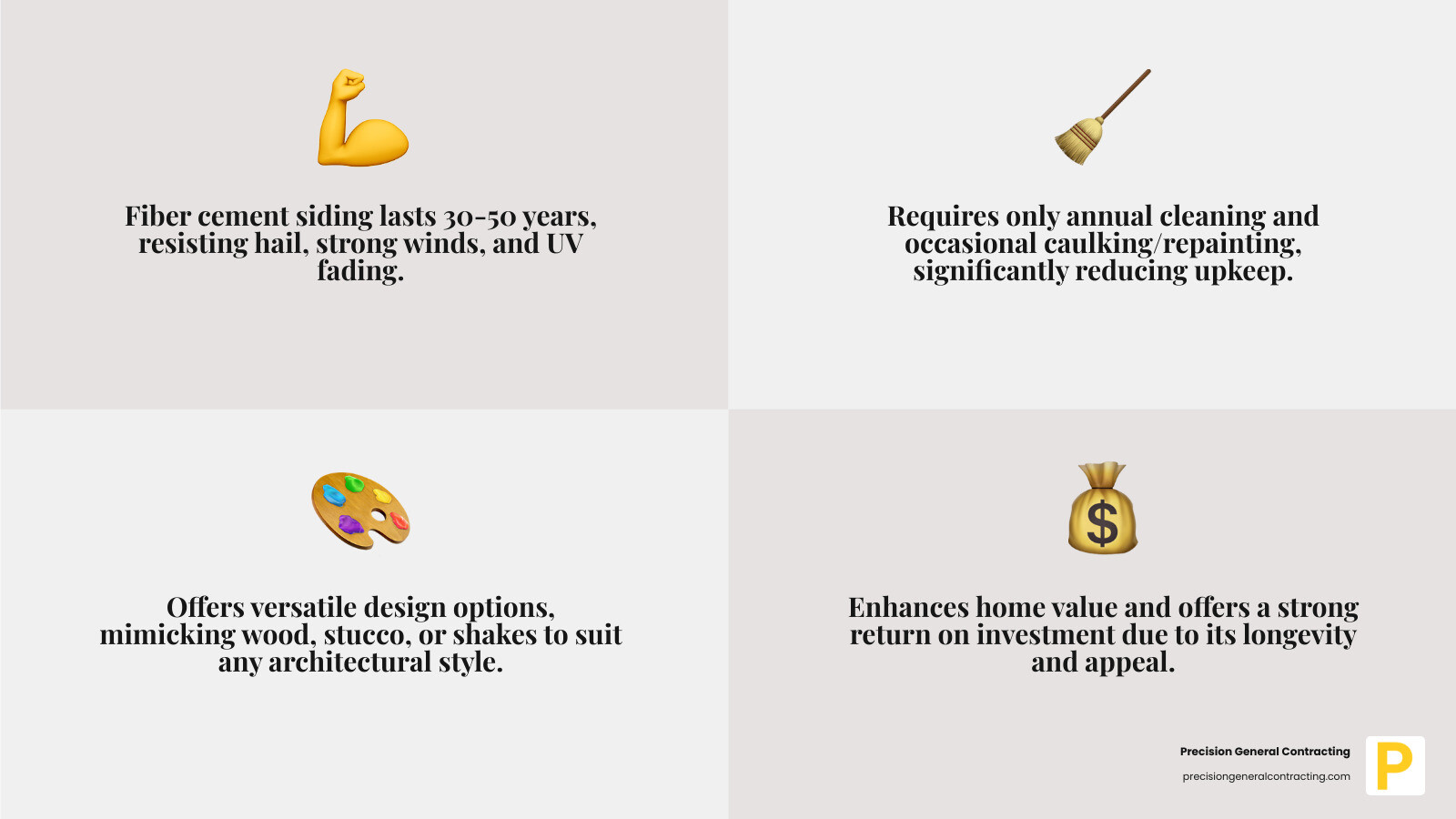
Our clients in areas like La Jolla, Carlsbad, and Rancho Santa Fe often choose fiber cement for its promise of a long-lasting, beautiful finish. With proper installation and care, fiber cement siding can last an impressive 30 to 50 years, making it a wise investment for any homeowner.
Benefits of Fiber Cement Siding
Fiber cement siding boasts a range of benefits that make it an increasingly popular choice for homeowners across San Diego County:
Moisture Resistance: Unlike wood, fiber cement siding is virtually immune to damage from moisture. This is a huge advantage in coastal areas like Del Mar and Encinitas, where humidity and potential for sea spray can cause traditional materials to rot or swell. It won't warp, crack, or delaminate due to moisture.
Fire Resistance: Fiber cement siding is non-combustible. It won't ignite when exposed to flames and will not contribute fuel to a fire, offering an added layer of protection for your home and family. This is particularly reassuring in regions where wildfire concerns can be present.
Pest and Termite Proof: Pests like termites and woodpeckers find fiber cement an unappealing meal. Its composition makes it resistant to insect infestations, saving you from costly pest control and structural repairs.
Weather Durability: From the bright sun in Poway to the occasional heavy rains in El Cajon, fiber cement siding stands up to tough weather conditions. It resists hail damage, strong winds, and UV fading, maintaining its aesthetic appeal for years.
Design Versatility: Fiber cement siding offers incredible design flexibility. It comes in various styles, including:
Lap Siding: Mimics traditional wood clapboard, providing a classic aesthetic.
Panel Siding: Offers a more contemporary, sleek look, often used for modern architectural styles.
Shakes: Replicates the rustic charm of cedar shakes, perfect for creating a distinct visual texture. This versatility means we can achieve nearly any architectural style you desire for your home in Coronado or Bonita.
How Climate Impacts Your Siding Choice
San Diego County's diverse microclimates mean that selecting the right siding material isn't a one-size-fits-all decision. Fiber cement siding is particularly well-suited for our region due to its inherent properties that counter local climate challenges:
Moisture: Coastal areas experience higher humidity and fog. Fiber cement's resistance to moisture prevents swelling and mold growth, which are common issues with less durable materials.
Sun Exposure: Our abundant sunshine can cause colors to fade and materials to degrade. Fiber cement, especially with baked-on color technology (like James Hardie's ColorPlus®), offers superior fade resistance, keeping your home looking vibrant for longer.
Freeze-Thaw Cycles: While less common in most of San Diego, areas further inland or at higher elevations might experience occasional freezing temperatures. Fiber cement is robust enough to withstand these cycles without cracking or becoming brittle.
Coastal Climates & Salty Air: The salty air along our coastline can accelerate corrosion and wear on certain building materials. Fiber cement's composition makes it highly resistant to this environmental stress.
High-Wind Areas: Fiber cement siding is engineered to withstand high winds, providing excellent protection against stormy weather, a valuable trait in any part of San Diego.
Vetting and Hiring the Best Fiber Cement Siding Installers
Choosing the right fiber cement siding installers is paramount to realizing the full benefits of this exceptional material. Even the highest quality fiber cement can underperform if not installed correctly. We recommend a thorough vetting process to ensure your investment is protected and your home looks its best.
When you're searching for professionals in San Diego, 4s Ranch, or Mira Mesa, look for companies with a proven track record, excellent customer reviews, and a deep understanding of fiber cement installation specifics. Experience, a solid reputation, proper licensing, and comprehensive insurance are non-negotiable. Always ask for a portfolio of their completed projects, ideally ones similar to yours.
Key Qualities of Top-Tier Fiber Cement Siding Installers
What truly sets exceptional fiber cement siding installers apart? It's a combination of expertise, dedication, and attention to detail:
Manufacturer Training: Look for installers who have specific training and certifications from leading fiber cement manufacturers, such as being part of the James Hardie™ ALLIANCE program. This indicates they have demonstrated experience working with homeowners and installing Hardie® products according to the manufacturer's strict guidelines. This specialized knowledge is crucial for ensuring product performance and warranty validity.
Specialized Tools: Fiber cement is a tough material that requires specific tools for cutting and installation. High-density fiber cement, for example, demands diamond-tipped blades or specialized shears. Professional installers will have the right equipment to ensure precise cuts and efficient installation, while also managing hazardous silica dust effectively.
Knowledge of Local Codes: Building codes in San Diego County can have specific requirements for siding installation, including weatherproofing, flashing, and clearances. A top-tier installer will be intimately familiar with these local regulations to ensure your project is compliant and passes inspections without a hitch.
Detailed Quotes: A reputable installer will provide a comprehensive, transparent quote that clearly outlines material costs, labor fees, and any additional services like old siding removal. This helps you understand where your money is going and avoid unexpected surprises.
Communication Skills: Clear and consistent communication throughout the project is invaluable. From the initial consultation in Carmel Valley to the final walkthrough in Rancho Bernardo, a good installer will keep you informed, answer your questions, and address any concerns promptly.
The Hiring Process: What to Expect from Fiber Cement Siding Installers
Navigating the hiring process can feel daunting, but knowing what to expect can make it smooth and stress-free:
Initial Consultation: This is where we discuss your vision, assess your home's current siding, and explore fiber cement options. We'll listen to your needs and offer expert advice custom to your property in Carlsbad or Chula Vista.
Free Estimate: Based on our consultation, we'll provide a detailed, no-obligation estimate. This will break down the costs for materials (fiber cement siding costs between $4 and $6 per square foot), labor (which can add $2 to $8 per square foot), and any other associated expenses.
Project Proposal Review: We'll walk you through the proposal, explaining the scope of work, recommended materials, and the estimated timeline. This is your opportunity to ask questions and ensure everything aligns with your expectations.
Contract Signing: Once you're comfortable with the proposal, we'll formalize the agreement. A clear contract protects both parties and outlines all the project details, payment schedules, and warranties.
Material Selection: You'll choose your preferred style, texture, and color of fiber cement siding. James Hardie offers an array of textures and profiles to suit any architectural style, and their ColorPlus® Technology bakes color onto the board in a controlled factory setting for a consistent, fade-resistant finish.
Project Timeline: We'll establish a realistic timeline for your project, from preparation to completion. While a 2,000-square-foot home might take about a week for installation, larger or more complex projects could take longer.
Completion Walkthrough: Upon completion, we'll conduct a thorough walkthrough with you. This ensures that every detail meets our high standards and your satisfaction.
The Anatomy of a Professional Installation
The beauty and longevity of fiber cement siding largely depend on the quality of its installation. It's a precise process that differs significantly from installing other materials like vinyl or wood. Professional fiber cement siding installers understand these nuances intimately, ensuring every plank is perfectly placed for maximum durability and aesthetic appeal.
At Precision General Contracting, we pride ourselves on adhering to the highest industry standards for every siding project in San Diego County. For more detailed information on our approach, please visit our Installation Resources from Precision General Contracting.
Critical Prep Work: The Foundation of Durability
Before the first piece of fiber cement siding goes up, meticulous preparation is essential. This foundational work ensures your siding will perform optimally for decades, especially against moisture and the elements.
Sheathing Inspection: The existing sheathing of your home (the layer beneath the siding) must be sound and free of damage. We inspect for any rot, water damage, or structural issues, making necessary repairs before proceeding.
Weather-Resistant Barrier (House Wrap): A high-quality weather-resistant barrier, often called house wrap, is crucial. This material is installed over the sheathing to protect your home from moisture infiltration while allowing internal moisture vapor to escape. Proper overlapping and sealing of seams with outdoor-use tape are vital steps.
Flashing Installation: This is perhaps one of the most critical steps for long-term moisture management. Flashing, typically made of metal or specialized membranes, is installed around all penetrations (windows, doors, vents) to divert water away from these vulnerable areas. Incorrect flashing is a common cause of moisture problems, leading to costly repairs down the line. We ensure precise flashing to prevent water from getting behind the siding, which is especially important in our coastal San Diego environment.
The Installation Process: Lap and Panel Siding
The actual installation of fiber cement siding is a multi-step process that requires skill and precision.
Starter Strip: The installation begins at the bottom of the wall with a perfectly level starter strip. This strip supports the first course of siding and sets the alignment for the entire wall. Using a chalk line to ensure perfect straightness is key.
Layout: Careful planning and layout are essential. We measure the height and width of each wall, sketching a layout that accounts for windows, doors, and corners. This minimizes waste and ensures a professional finish.
Nailing Techniques:
Blind Nailing: For lap siding, nails are often driven through the top portion of each plank, which is then covered by the subsequent course. This creates a clean, fastener-free appearance. Nails should be placed about 1 inch from the top edge and at least 3/8 inch from the ends of the board. They must be flush with the surface, not protruding or sunk too deep. We only use corrosion-resistant fasteners, such as hot-dipped galvanized or stainless steel nails, to prevent rust and staining.
Face Nailing: Panel siding and trim pieces are typically face-nailed, meaning fasteners are visible. Here, precise placement and consistent depth are critical for aesthetics and structural integrity.
Overlap Requirements: For lap siding, proper overlap is crucial for water resistance. Manufacturers typically recommend an overlap of 1.25 to 2 inches. Each subsequent course overlaps the one below, creating a protective barrier.
Expansion Gaps: Fiber cement siding expands and contracts slightly with temperature changes. Professional installers understand the need to leave small gaps (typically 1/8 inch) at butt joints (where two pieces meet end-to-end) and around windows and doors. These gaps are then sealed with high-quality, exterior-grade caulk.
Joint Treatment: All vertical gaps, corners, and areas where siding meets trim or other surfaces are carefully caulked to ensure a watertight seal. This prevents moisture intrusion and protects the underlying structure.
Common Mistakes and Safety Precautions
Even for seasoned professionals, fiber cement siding installation requires careful attention to detail to avoid common pitfalls:
Silica Dust Safety: Cutting fiber cement siding generates respirable crystalline silica dust, which can be harmful if inhaled. Our fiber cement siding installers prioritize safety by wearing appropriate Personal Protective Equipment (PPE), including NIOSH-approved dust masks (N95 or higher), safety glasses, and gloves. We use specialized cutting tools that minimize dust or employ dust collection systems, and always work in well-ventilated outdoor areas.
Proper Cutting Techniques: Incorrect cutting can lead to splintering or uneven edges. Using the right blades (diamond-tipped for power saws) and techniques (scoring and snapping for shorter cuts) is crucial.
Overdriven Nails: Driving nails too deep can crack the siding and compromise its holding power, potentially voiding the manufacturer's warranty. Nails should be flush with the surface.
Insufficient Clearances: Failing to maintain proper clearances from the ground (at least 6 inches), roof lines (1-2 inches), and horizontal flashing (1/4 inch) can lead to moisture damage, rot, and pest infestations.
Improper Caulking: Using the wrong type of caulk or applying it incorrectly can lead to cracks and gaps, allowing water to penetrate. We use high-quality, flexible, exterior-grade caulk specifically designed for fiber cement.
Voiding Warranty: Many of these mistakes, such as ignoring manufacturer guidelines for installation, using incorrect fasteners, or failing to prime cut edges, can void your fiber cement siding's warranty. A professional installer ensures every step aligns with these crucial requirements.
Costs, Warranties, and Long-Term Value
Investing in fiber cement siding is a decision that pays dividends over time. While the initial cost might be higher than some other materials, the long-term value, durability, and peace of mind it offers are unparalleled.
Understanding Installation Costs
The cost of fiber cement siding installation can vary significantly based on several factors:
Cost per Square Foot: Materials typically range from $4 to $6 per square foot. The labor for installing fiber cement siding adds another $2 to $8 per square foot. This means a professional installation can cost between $6 and $14 per square foot.
Labor Costs: This component accounts for a substantial portion of the total. For a 2,000-square-foot home, you could spend around $10,000 for DIY materials, but professional installation could double that amount, reaching $20,000 to $28,000. This higher cost reflects the specialized skills, tools, and efficiency that professional fiber cement siding installers bring to the table.
Material Costs: The specific brand, style (lap, panel, shakes), and finish (primed vs. pre-finished with ColorPlus® technology) will influence material pricing.
Project Complexity: Homes with intricate architectural details, multiple stories, or challenging access points will generally incur higher labor costs.
Old Siding Removal: If we're replacing existing siding, the cost of removal and disposal will be factored in. This also includes any necessary repairs to the underlying sheathing or structure.
Home Size: Naturally, a larger home will require more materials and labor, increasing the overall cost. The average cost to replace siding for a home is $11,450, but can range up to $40,000 or more depending on these factors.
While the upfront investment may seem substantial, fiber cement siding offers an excellent return on investment through increased home value, improved curb appeal, and significant long-term savings on maintenance and repairs.
Warranties and Guarantees to Look For
A robust warranty package is a hallmark of quality and confidence from both the manufacturer and your fiber cement siding installers. We believe in providing our clients in San Diego County with comprehensive protection:
Manufacturer Warranty: Leading brands like James Hardie offer impressive warranties, typically a 30-year limited warranty on their fiber cement siding products. This covers manufacturing defects and ensures the material itself meets specific quality standards.
Labor Warranty: Beyond the product warranty, it's crucial to look for a strong labor warranty from your installer. We offer a 10-year labor warranty on our siding installations. This guarantees that our workmanship meets the highest standards and provides you with peace of mind, knowing that any installation-related issues will be addressed.
Transferable Warranties: A transferable warranty is a fantastic benefit if you ever decide to sell your home. It adds significant value, assuring potential buyers of the quality and durability of your siding.
Finish Warranty: If you opt for pre-finished fiber cement siding, check for a separate finish warranty, which typically covers paint adhesion and fade resistance for a certain period. James Hardie's ColorPlus® Technology comes with a 15-year limited warranty on the finish.
Maintaining Your Investment for Decades
One of the most attractive aspects of fiber cement siding is its low maintenance requirements. Once installed by skilled fiber cement siding installers, your new exterior will be a breeze to care for:
Low Maintenance: Unlike wood siding, which often requires frequent painting and repairs, fiber cement demands minimal upkeep. This is a huge time and cost saver for homeowners in busy areas like San Marcos and Vista.
Annual Cleaning: A simple annual washing with a garden hose and a mild household cleaner is usually sufficient to remove dirt, dust, and mildew, keeping your siding looking fresh. Avoid harsh chemicals or power washing, as these can damage the finish.
Caulking Inspection: Periodically inspect caulk joints around windows, doors, and seams. If you notice any cracks or deterioration, reseal them promptly with a high-quality exterior-grade caulk to maintain a watertight seal.
Repainting Schedule: While fiber cement holds paint exceptionally well, it will eventually need a fresh coat. Typically, quality fiber cement siding requires repainting only every 15 to 20 years, significantly less often than wood siding, which might need repainting every 5 to 7 years. If you chose a pre-finished product, the baked-on color lasts even longer, resisting fading.
Color Technology: James Hardie's ColorPlus® Technology is a prime example of how advanced finishes contribute to low maintenance. The factory-applied, multi-coat finish resists chipping, fading, and cracking, ensuring your home's color remains vibrant for years with minimal effort.
Frequently Asked Questions about Fiber Cement Siding
How long does fiber cement siding last?
Fiber cement siding is exceptionally durable, with a typical lifespan of 30 to 50 years when properly installed and maintained. Many manufacturers offer warranties of 30 years or more. Its robust composition makes it resistant to rot, pests, and fire, contributing to its impressive longevity. This means homeowners in San Diego County can enjoy a beautiful, protective exterior for decades without the need for frequent replacement.
What is the most common problem with fiber cement siding installation?
The most critical issues stem from improper installation, such as inadequate moisture management (poor flashing or house wrap), incorrect fastening (overdriven nails, using improper fasteners), and failing to leave proper clearance gaps. These mistakes can lead to moisture damage, compromised structural integrity, and ultimately void the manufacturer's warranty. That's why choosing experienced fiber cement siding installers who carefully follow manufacturer guidelines is paramount to avoiding these costly problems.
How much does it cost to install fiber cement siding?
The average cost to replace siding for a home is around $11,450, but can vary widely up to $40,000 or more. Labor typically adds $2 to $8 per square foot, on top of material costs of $4 to $6 per square foot. Total project costs are influenced by your home's size, the complexity of the job (e.g., architectural details, multiple stories), the specific fiber cement products chosen, and whether old siding needs to be removed. For a 2,000-square-foot home, professional installation can range from $20,000 to $28,000.
Conclusion
Choosing fiber cement siding for your home in San Diego County is a smart decision that combines enduring beauty with exceptional durability. However, the true success of this investment hinges on partnering with the right fiber cement siding installers. Their expertise ensures that every step, from critical preparation to precise installation and meticulous finishing, is executed flawlessly.
At Precision General Contracting, we are committed to delivering expert installation that guarantees peace of mind and significantly increases your home's value. Our dedication to quality craftsmanship and adherence to manufacturer specifications means your fiber cement siding will perform optimally for decades, standing strong against our local climate challenges.
We specialize in exterior home improvements. From dual-pane window installations and roof replacements, to lifetime exterior paint and patio covers, we are your partners in home improvements.
Key Takeaways: When considering a siding upgrade for your home, it’s important to find a reliable San Diego general contractor that offers comprehensive siding services. Whether you're looking to enhance your home's curb appeal or improve its energy efficiency, getting an accurate estimate is the first step toward a successful project. Why Choose Professional Siding […]
Key Takeaways The solar industry is evolving rapidly, bringing groundbreaking advancements in solar panel systems. Homeowners and businesses alike are increasingly adopting solar power as a reliable and cost-effective energy solution. With the rise of renewable energy sources, fossil fuels are becoming less attractive due to their environmental impact and rising electricity costs. Solar energy […]
Protect your home with fire-resistant siding. Learn about the best options and why working with a trusted San Diego general contractor makes all the difference.
Picking the right fire-resistant siding isn't just about safety - it's about finding what works for your home, budget, and style. Here's how to choose wisely.
Why James Hardie Siding Options Matter for Your Home James Hardie siding options give you the power to transform your home's exterior with materials engineered to last.
Ready to enhance your home's curb appeal? Our team is here to bring your vision to life with premium exterior home improvements. Whether it's roofing, siding, or landscaping, we’ve got you covered.
By providing your phone number above and pressing the "Send" button below, you agree to receive text messages from Precision General Contracting and also agree to our Privacy Policy. Message frequency will vary. Message and data rates may apply. Reply HELP for help or STOP to unsubscribe.
Precision General Contracting
10650 Treena Street Suite 203 San Diego, CA 92131
License #981269
We specialize in exterior home improvements. From dual-pane window installations and roof replacements to exterior coatings and patio covers, we are your partners in home improvement.
Ready to enhance your home's curb appeal? Our team is here to bring your vision to life with premium exterior home improvements. Whether it's roofing, siding, or landscaping, we’ve got you covered.
By providing your phone number above and pressing the "Send" button below, you agree to receive text messages from Precision General Contracting and also agree to our Privacy Policy. Message frequency will vary. Message and data rates may apply. Reply HELP for help or STOP to unsubscribe.